Beginners Guide to Making Your own Ceramic Glaze
If you’ve ever looked at glaze recipes and felt instantly overwhelmed by numbers, formulas, and unfamiliar materials, you’re not alone. This guide is here to change that. I break glaze making down into the simplest, most approachable way possible. This is about getting confident, making informed decisions and most importantly, creating surfaces you actually love. This isn’t a deep dive into chemical analysis. It’s a practical, creative approach to glazing for beginners who want beautiful colours, interesting textures and reliable results without the intimidation.
If you’ve ever wanted:
Complete control over your colours and finishes
Work that feels truly unique to you
Freedom from relying on shop-bought glazes
To stop wasting money on catfish glazes that look nothing like the picture
To save up to 90% on glazing costs
Mixing your own glazes is significantly more cost-effective over time, especially once you start making larger batches or working consistently. What seems complicated at the beginning can end up saving you a lot of money in the long run.
The rest of this guide will take you step-by-step through everything you need to start making your own glazes with confidence, from core theory and essential equipment to testing, troubleshooting, and developing your own signature surfaces.
Why listen to me? I’ve been exactly where you are, overwhelmed by glazing. So I’ve broken it down into a simple but in-depth approach, so you’re never left without an answer.
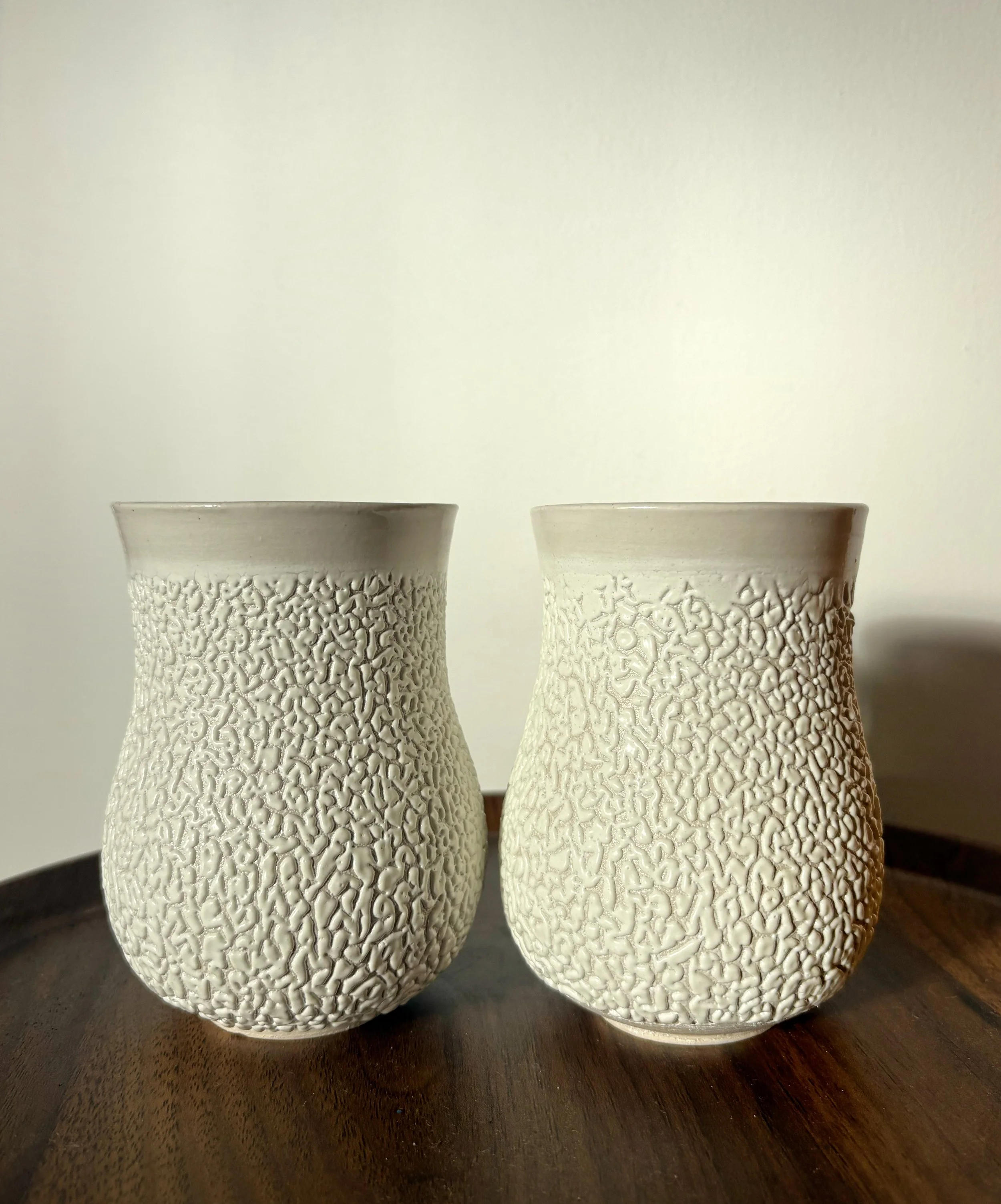
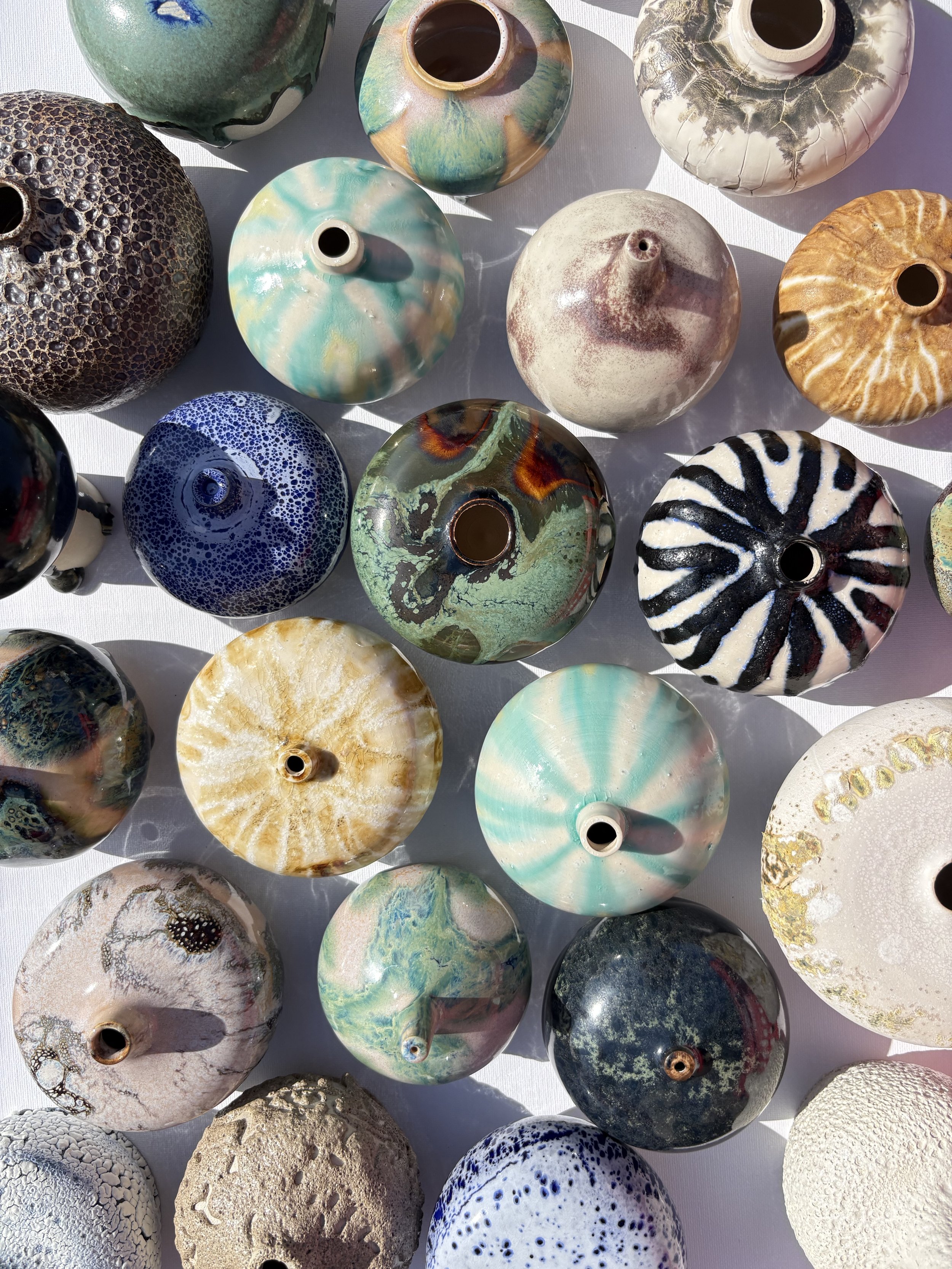
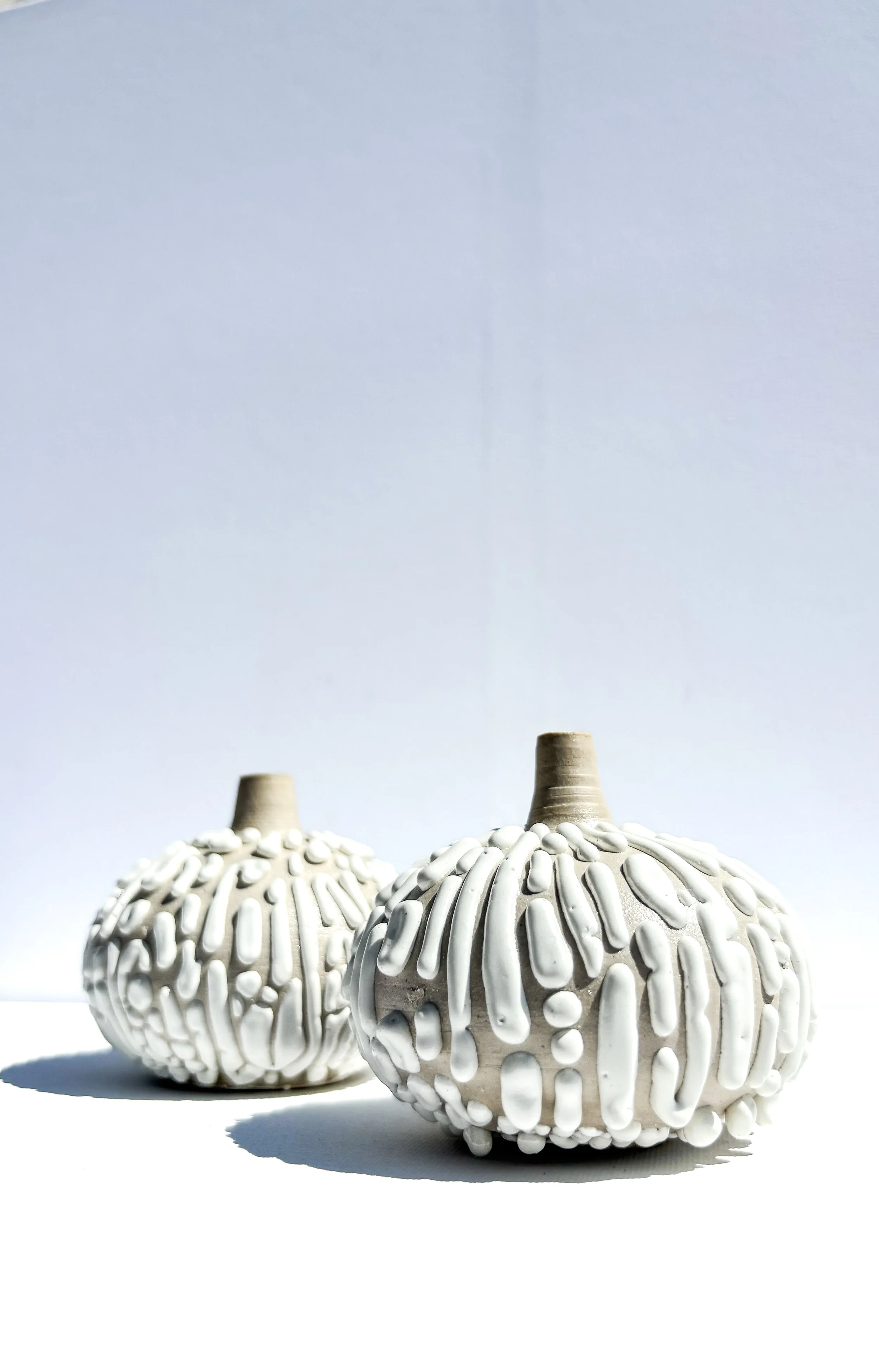
Every ceramic piece you see from me is made using glazes I’ve made myself that I’ve tested and experimented to build my eclectic collection, I had so much fun doing it that I want to share the experience so you can enjoy it just as much as I did.
-
-
Making your own ceramic glaze can feel intimidating at first. It’s technical, unfamiliar, and full of materials you may not recognise. That feeling is completely normal. Every potter who mixes their own glazes started exactly there. I spent two years in my ceramics course avoiding glazing all together because I was intimidated but now it’s the sole purpose I create.
Making your own ceramic glaze can feel intimidating at first. It’s technical, unfamiliar, and full of materials you may not recognise. That feeling is completely normal. Every potter who mixes their own glazes started exactly there. I spent two years in my ceramics course avoiding glazing all together because I was intimidated but now it’s the sole purpose I create.
-
-
-
Lesson 1: What Is a Glaze?
Let’s break glaze theory down to understand what makes a glaze so you can feel confident when making recipes.
Let’s break glaze theory down to understand what makes a glaze so you can feel confident when making recipes.
-
Lesson 2: The Cost Effectiveness of Mixing Your Own Glazes
Instead of spending £20 on a single jar of commercial glaze, I’ll show you how to break that cost down and produce batches for a fraction of the price.. This is designed to give you an understanding of glaze costs so you can make smarter decisions in your practice.
Instead of spending £20 on a single jar of commercial glaze, I’ll show you how to break that cost down and produce batches for a fraction of the price.. This is designed to give you an understanding of glaze costs so you can make smarter decisions in your practice.
-
-
-
Lesson 3: Equipment, setting up your space and test tiles
This lesson will break down all the equipment needed to get started. It seems like a lot to begin with, but it will be more cost effective in the long run. I explain the cheapest and easiest way to start and how to repurpose already owned items.
This lesson will break down all the equipment needed to get started. It seems like a lot to begin with, but it will be more cost effective in the long run. I explain the cheapest and easiest way to start and how to repurpose already owned items.
-
Lesson 4: Safety (Very important)
This lesson explains the key safety precautions involved in making your own glazes, as well as important considerations for your usual glaze process, ensuring you can work safely and protect your health while creating.
This lesson explains the key safety precautions involved in making your own glazes, as well as important considerations for your usual glaze process, ensuring you can work safely and protect your health while creating.
-
-
-
Lesson 5: Making Glaze, A Step by step
This is the section I wish had existed when I started. You'll walk away with a proven, food-safe glaze recipe ready to use from day one, and the confidence to adapt it as you grow. Add to that a solid understanding of oxide testing and a structured practice routine and you'll have everything you need to stop guessing and start creating glazes you're truly proud of.
This is the section I wish had existed when I started. You'll walk away with a proven, food-safe glaze recipe ready to use from day one, and the confidence to adapt it as you grow. Add to that a solid understanding of oxide testing and a structured practice routine and you'll have everything you need to stop guessing and start creating glazes you're truly proud of.
-
Lesson 6: Glaze Flaws, What Goes Wrong, Why It Happens, and How to Fix It
This section addresses many of the common questions you may have had about your most ugly pieces…why a glaze has crawled, what are these bubbles, or why a piece has decided to be one with the kiln shelf…
Rather than losing hours of work to unreliable results, this course will help you identify the causes of these issues, make the necessary adjustments and prevent them from happening again.
This section addresses many of the common questions you may have had about your most ugly pieces…why a glaze has crawled, what are these bubbles, or why a piece has decided to be one with the kiln shelf…
Rather than losing hours of work to unreliable results, this course will help you identify the causes of these issues, make the necessary adjustments and prevent them from happening again.
-
Is there anything more I can do?
I’d really value your feedback on this course. As this is my first time creating something like this, your thoughts will help me continue to improve and refine it.
My goal is to support those who have been interested in getting into glaze making but aren’t sure where to begin, and I hope this provides a clear and accessible starting point.
I’d really value your feedback on this course. As this is my first time creating something like this, your thoughts will help me continue to improve and refine it.
My goal is to support those who have been interested in getting into glaze making but aren’t sure where to begin, and I hope this provides a clear and accessible starting point.
-
What You’ll Get From This Course
I specialised in ceramics and glaze making during my Design Craft BA, and I’ve condensed everything I learned into this course - saving you time, confusion and a lot of tuition fees.
Inside, you’ll learn:
Glaze theory (made simple and easy to understand)
How to make your own glazes for a fraction of the cost
The equipment you actually need (without overspending)
How to safely set up your glazing space ( Important health and safety you probably didn’t know about)
A step-by-step, food-safe beginner glaze recipe
How to add oxides to create your own colours
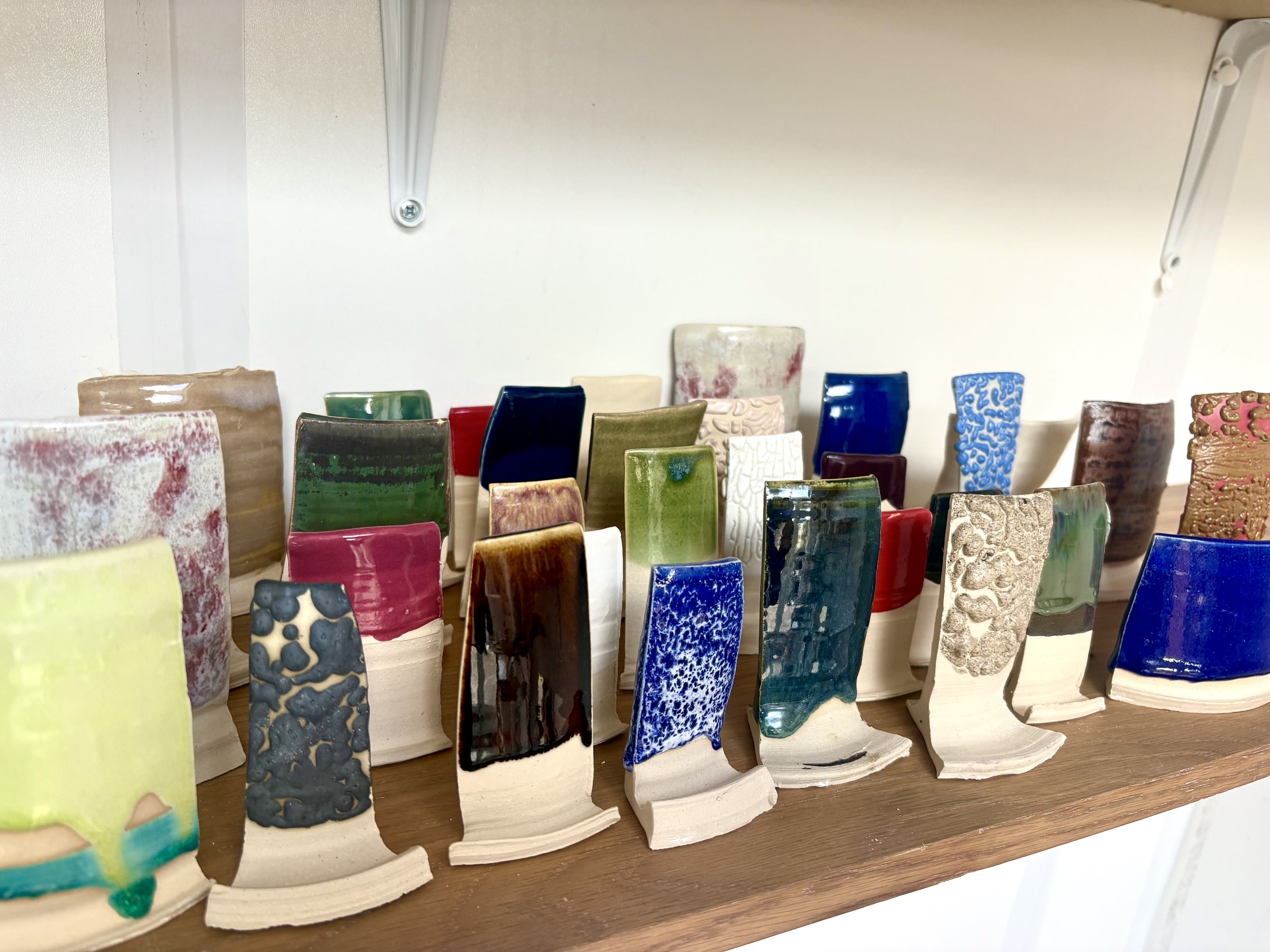
How to properly test your glazes
Common glaze flaws and how to fix them
Alongside this, I’ve included personal tips and real experience from my own practice so you’re not just learning theory, you’re learning what works.
Everything is broken down in the simplest, most approachable way possible, so you can build confidence and start making your own glazes without feeling overwhelmed.